




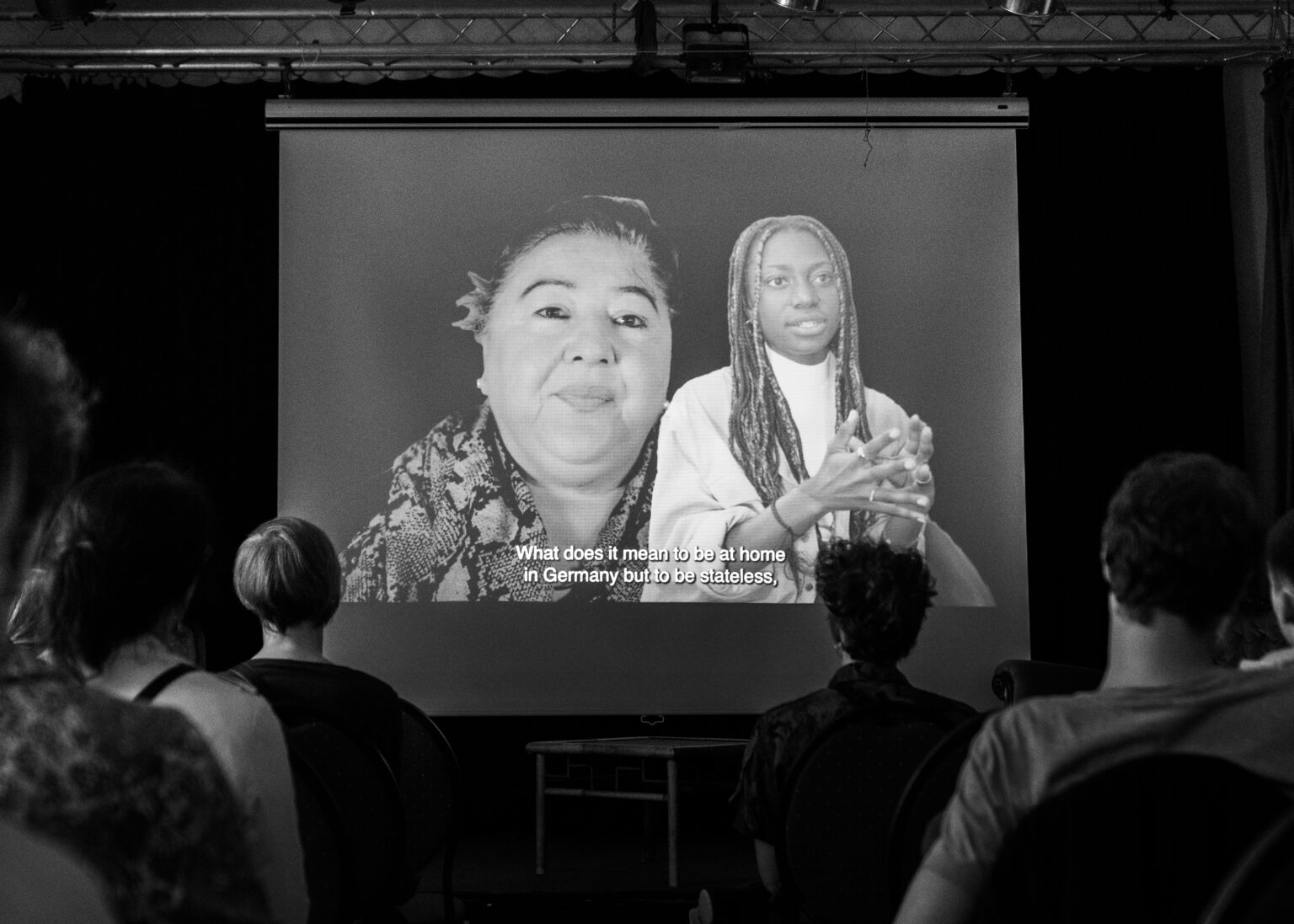
On February 21, 2025, we showed the film The Right to Have Rights(Opens in a new tab/window) together with the boat people project in the OM10 in Göttingen.
The film looks at what it means to have or not to have German citizenship or even to be stateless. In addition to some basic information on the topic, individuals from different backgrounds talk about their own experiences.
Some of them were born in Germany and grew up without German citizenship - an aspect that continues to amaze many people in this country. Many people are not aware that you do not automatically receive German citizenship at birth. This is because the German nation is based on the ius sanguinis (literally translated, this means blood law, but is usually called the principle of descent). This means that anyone who is descended from Germans is German. This law was reformed in 2000 so that people who are not descended from Germans can also obtain German citizenship. However, this remains difficult in practice. We therefore repeatedly see young Roma born here, whose parents fled the wars in Yugoslavia, being deported.
Some of them, like other people born in Germany, are stateless. Often the children themselves do not know that they are stateless and therefore do not have the same rights as other people. Statelessness is also "inherited" from parents to children. Unfortunately, statelessness is often not recognized as such. For those affected, this means that they cannot get a residence permit and remain in the nirvana of tolerated status. For many, this also means that they can be deported. People are deported to the "Western Balkan states" in particular, even without a passport. As a rule, the de facto stateless people who are deported to these countries are Roma.
Roma, Sinti and Jewish people were stripped of their German citizenship during the Nazi era. Those who survived and returned to Germany from the camps were stateless after the war. To this day, there are Sinti who have not regained their German citizenship.
Some of the film's protagonists have now been naturalized and can report what this difference means to them - for example, being able to campaign for human rights with greater security. Political engagement is fraught with obstacles, especially for refugees and people with insecure residency rights. They have to constantly fight for themselves - this includes, in particular, working hard to secure a living. Since most are dependent on precarious employment and earn correspondingly little, engagement becomes a privilege that only a few can afford.
At the same time, refugees are made afraid of political engagement. For example, they are warned not to take part in demonstrations because they could otherwise be deported. This works, and many are afraid to stand up for their rights.
The alliance Pass(t) uns allen, of which the Roma Center is a member, has been calling for the ius soli to be implemented in Germany since its inception, i.e. the principle of place of birth. This means that anyone born here should have the right to German citizenship.
The event also reiterated how important it is to make collective demands such as the principle of place of birth. In addition to the right to citizenship from the outset, people must also have the right to education and work when they flee or migrate to Germany. The fact that many people, including Roma refugees from Yugoslavia, were denied this right for many years still has serious consequences. People who flee to Germany today from so-called safe countries of origin are denied the right to work. This means that they do not even have the chance of ever demonstrating the so-called integration achievements that would be necessary to be able to apply for residence and, in the long term, naturalization.
The event revealed the need for us to provide more information on this complex of issues. This affects politics, the media and the public, but also schools in particular.
And at the same time, the demand for the birthright to German citizenship can serve as a unifying element for many different groups that would otherwise have to fight in isolation.
In addition, we also need broader solidarity and connection between the struggles. Because in many cases the problems and struggles overlap with those of other groups, such as single parents, the homeless and others.
The photos are from the event on February 21, 2025 in the OM10 in Göttingen.